Maximising storage capacity in modern residential properties often leads homeowners, joiners, and interior specifiers to select deep, full-depth cabinetry options. While a shelf depth exceeding 500 mm offers abundant volume on paper, everyday practical usage frequently reveals severe accessibility and usability issues. Items placed towards the back quickly become obscured, leading to forgotten clothing, awkward reach angles, and eventual internal disorganisation within the unit.
This comprehensive section examines the specific technical, structural, and ergonomic challenges associated with deep shelving in bespoke built-in units and sliding wardrobe interiors. We analyse how improper depth planning degrades everyday functionality, impacts structural shelf loading over long spans, and causes systemic spatial inefficiency. By fully understanding these spatial constraints, property owners and professional designers can implement targeted organisation systems, engineered pull-out mechanisms, and modular compartmentalisation strategies. These solutions transform deep wardrobe cavities into highly functional, easily accessible storage environments without losing valuable volume.
Standard sliding wardrobe interiors often feature a generous internal shelf depth that seems entirely ideal for maximising overall storage capacity at first glance. However, deep fixed shelving creates severe physical accessibility issues, as items stored behind the front row remain completely obscured and frustratingly difficult to retrieve without disturbing adjacent piles.
In the UK, internal wardrobe depths frequently exceed the standard 600 mm arm-reach threshold, which results in over 30% of usable internal volume turning into neglected dead space. This systemic lack of visibility causes repeated double-buying, physical strain when reaching into dark corners, and damaged garments squashed into structural rear recesses.
Integrating engineered pull-out runner systems, integrated LED task lighting, and custom modular drawer inserts resolves these long-standing spatial friction points cleanly. These modern internal fit-out methods deliver a cost-effective strategy to maintain long-term neatness while ensuring complete visual clarity across every single square centimetre of usable space.
KEY TAKEAWAYS
- Deep shelf depth exceeding 500 mm frequently conceals clothing in rear corners and creates unusable dead zones unless supported by engineered internal pull-out mechanisms
- Custom sliding wardrobe interiors perform far better when equipped with full-extension heavy-duty runners, clear acrylic dividers, and drop-down wire baskets to retrieve hidden items effortlessly
- Strategic compartmentalisation enables property owners to double their usable storage capacity while ensuring all garments remain neatly organised, fully visible, and easy to reach daily
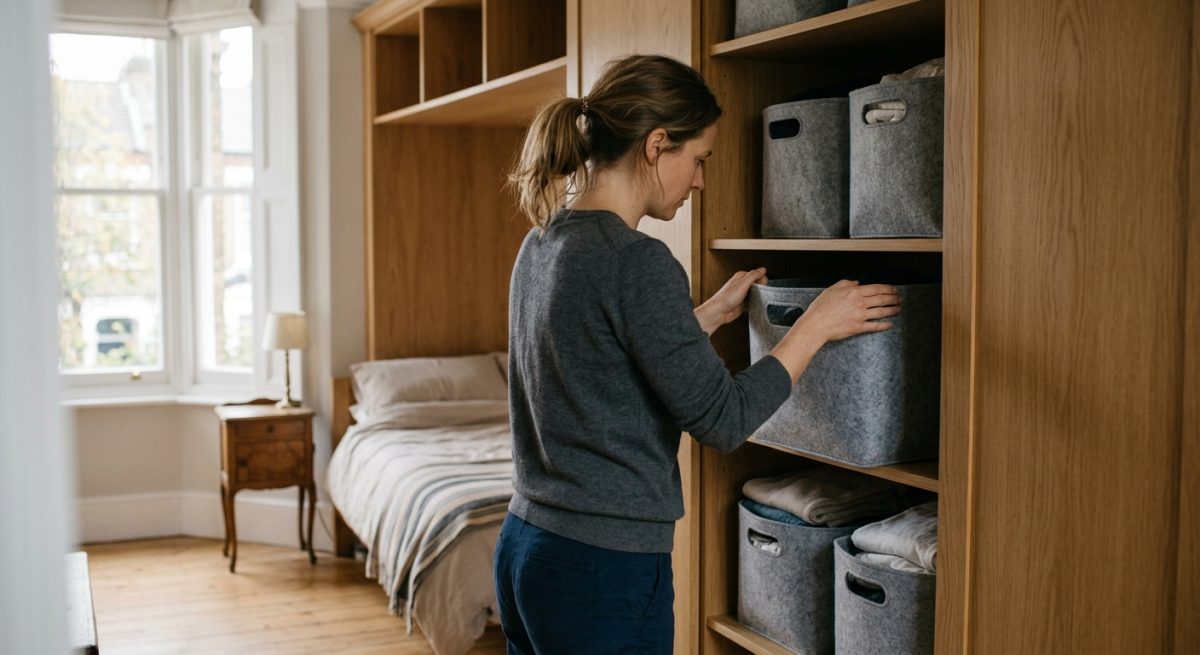
Table of Contents
- Installing pull out baskets and sliding runners for deep shelves
- Using clear vertical dividers and modular inserts
- Creating clear zones for seasonal and daily items
- Adding internal LED lighting to illuminate dark shelf corners
- Planning built in interior storage with online design tools
- Frequently Asked Questions around Internal Wardrobe Storage
Need Specialist Advice on internal wardrobe storage?
Speak to our technical team today for tailored specifications, regulations compliance, and practical support.
Installing pull out baskets and sliding runners for deep shelves
Selecting the Right Drawer Runners
Choosing heavy-duty full-extension drawer runners transforms deep wardrobe cavities into easily accessible storage spaces. These mechanical hardware components allow pull out drawers to slide smoothly while supporting up to 35 kg of clothing weight.
Standard fixed shelves often swallow smaller items at the back, making visibility nearly impossible without pulling everything out. Installing high-grade ball-bearing runners allows you to extend the rear of the storage unit completely past the front edge of the carcass. Soft-close damping mechanisms ensure smooth operation and prevent garments from shifting whenever you open the unit.
Installing Wire Baskets for Maximum Visibility
Lightweight wire baskets provide instant visual access to stored folded garments across deep shelf spaces. Breathable metal mesh constructions allow air to circulate freely around fabrics, preventing stale air build-up inside dark wardrobe spaces.
Unlike solid wooden units, open-mesh wire baskets let you identify items stored at the rear without pulling the container entirely out. They work exceptionally well for jumpers, t-shirts, and bed linens that require continuous airflow to remain fresh in traditional British homes. Securely mounting these units onto sliding mechanisms gives you 100% visibility of your entire wardrobe inventory. Standard 450 mm or 500 mm deep frame options fit neatly inside most UK fitted wardrobe designs without compromising space. Using grey or chrome powder-coated steel finishes guarantees a durable, rust-resistant surface that protects delicate clothing fibres over 15 to 20 years of daily use.
Implementing Vertical Stacking For Efficiency
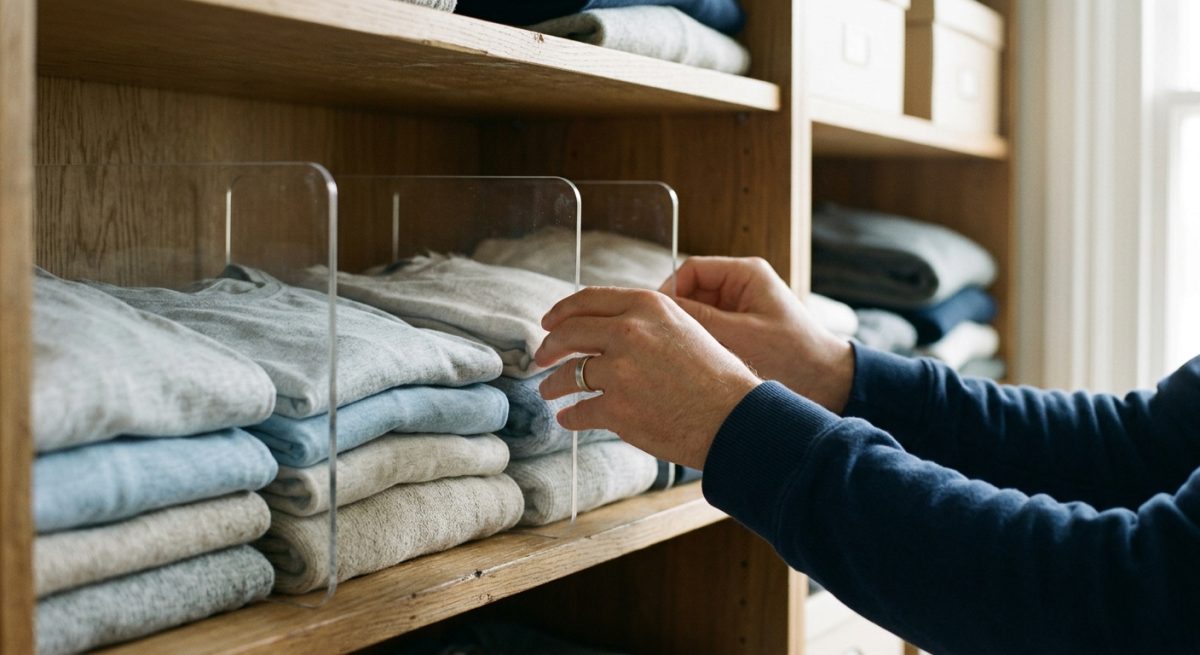
Vertical stacking arranges folded clothes horizontally in a file format rather than in traditional top-down piles. This method reduces item extraction friction and preserves neatly folded organisation across deep shelf layouts.
Stacking items vertically within rigid containers or shallow shelf dividers lets you view every item at a single glance. Traditional piles force you to lift multiple items to reach the bottom shirt, which usually causes 50% of the stack to unravel. Storing clothes upright like index cards eliminates shelf clutter and ensures garments remain crisp even after weeks in storage.
Pair vertical stacking with sliding trays or pull-out inserts to utilise the full 500mm depth effectively. This configuration works particularly well for knitwear, jeans, and activewear stored on mid-height wardrobe shelves. You eliminate wasted vertical space while keeping daily outfit choices organised.
Creating clear zones for seasonal and daily items
Mapping Ergonomic Zones Across Deep Shelf Planes
Deep wardrobe shelves require vertical and front-to-back spatial mapping to keep high-frequency garments within easy reach. Positioning daily essentials in the prime sightline zone prevents clutter from building up across deeper 60cm platforms.
Standard built-in wardrobes often feature shelves measuring 50 to 60cm in depth, which naturally encourages chaotic piling if left unmanaged. To solve this, divide each shelf into 2 distinct functional regions. The front 30cm area serves as your primary active zone for daily workwear, frequently worn trousers, and essential tops. The rear 30cm region acts as a secondary buffer zone reserved for low-frequency items, extra bedding, or backup accessories. Maintaining a strict physical line between these 2 zones ensures daily items never drift into the dark rear corners of your cabinet.
Implementing Seasonal Rotation Systems
A structured seasonal rotation moves out-of-season apparel to the rear or top shelf areas twice per year. Using modular storage boxes keeps off-season knitwear protected while freeing up prime front-row space for active wardrobes.
Managing deep wardrobe space effectively relies on a disciplined routine every 6 months. When spring or autumn arrives, execute this simple 3-step transition procedure.
1. Empty the entire front active zone of the shelf and inspect all garments for cleaning or repairs.
2. Pack heavy winter coats or summer linen garments into breathable storage boxes and slide them into the rear zone or top shelves.
3. Shift the upcoming season’s wardrobe into the front active zone, arranging garments by weight and colour.
Executing this process ensures your primary shelf space reflects current weather needs without cluttering your room. Uniform fabric bins with tight lids prevent dust accumulation on stored garments while maintaining a neat, streamlined aesthetic across the shelf edge.
Standardising Categorisation With Clear Labelling
Clear labelling on container fronts removes guesswork when retrieving items hidden in deep-set wardrobe recesses. Text or visual markers allow every household member to return folded items to their designated zone consistently.
Without visible markers, deep shelf bins quickly turn into unorganised dumping grounds for random clothing. Applying high-contrast tags or printed adhesive labels to the front face of every container establishes clear boundaries for specific garment types. Group similar items together, such as thermal layers, sports gear, or swimsuits, and assign 1 box per category. When every container features explicit identification, finding niche items takes under 5 seconds, even on shelves positioned well above eye level. This approach eliminates the need to pull out multiple boxes to locate 1 specific garment, preserving shelf order over time.
Adding internal LED lighting to illuminate dark shelf corners
Selecting Low-Profile LED Strip Lights
Fitting aluminium-channel LED strip lights along the underside of deep shelves eliminates shadows without intruding on storage height. These low-profile fixtures provide an even wash of neutral light that keeps folded garments visible right into the back corners.
Deep cabinetry often turns the rear 300mm of a shelf into a dark void where clothes get misplaced. Integrating flexible LED strip lights into your internal wardrobe design solves this problem by casting direct illumination down onto each tier. Choose diffusers with frosted covers to soften glare and create a uniform beam angle across the timber surface. A colour temperature around 4000K offers natural colour rendering, making it easy to distinguish between black and navy items.
Surface-mounted extrusions measure just 8mm in depth, preserving vertical clearance while shielding the light source from direct line of sight.
Installing Motion Sensor Lighting Controls
Integrated motion sensor lighting switches on automatically when you open the wardrobe doors and powers down after 30 seconds of inactivity. This hands-free control prevents battery drain and ensures dark shelf recesses are instantly readable.
Passive infrared sensors respond to movement within a 2-metre range, triggering the circuit the moment a door glides open. For seamless daily operation, follow this 3-step setup routine.
1. Mount the sensor unit on the underside of the top shelf, positioning it 50mm back from the front edge to ensure a clear line of sight.
2. Connect the sensor leads to your 12V power pack, securing excess cable with adhesive clips along the rear carcass joint.
3. Test the trigger response by opening the door in low-ambient conditions, adjusting the timer dial to your preferred duration between 15 and 60 seconds.
Optimising Cable Routing and Power Supply
Routing thin low-voltage cables through discrete 8mm channels behind shelf supports maintains a clean aesthetic while keeping power drivers safely ventilated. Concealing power units in top-level voids ensures safe operation and easy maintenance over a 10-year lifespan.
Proper cable management keeps your lighting system safe and unobtrusive. Hardwired setups require a compact 12V transformer tucked into an upper service void where air circulates freely to prevent overheating. If you prefer a simpler retrofit, choose rechargeable lithium-ion battery packs that attach magnetically to the underside of the shelf. These units deliver 3 to 6 months of use per charge under typical daily conditions. Running micro-cables through pre-drilled holes at the back of the carcass keeps wires tucked out of sight, protecting them from snagging on heavy woollens or wire baskets.
Planning built in interior storage with online design tools
Digital planning tools remove the guesswork from configuring deep storage spaces by rendering accurate 3D preview models. Modern web-based software allows you to manipulate cabinet dimensions, shelf depths, and hardware configurations down to the last millimetre, ensuring your internal storage functions seamlessly.
Visualising Layouts Using Digital Planning Tools
Web-based design platforms generate instant visual representations of full storage systems to streamline spatial planning. Combining these tools with an online door designer ensures that outer frame openings and door widths never obstruct internal pull-out drawers or deep baskets. Users can drag and drop structural dividers, hanging rails, and tier arrangements directly onto a 2D floor plan before converting the project into an interactive 3D model. This digital workflow highlights potential access bottlenecks, such as tight clearance against bedroom doors, angled ceilings, or loft eaves, long before timber cutting begins. You can easily test multiple configurations to find the most efficient layout for your daily routines.
When incorporating glass door elements or internal mirrored features, always specify 4mm safety-backed glass rather than toughened glass. Made-to-measure safety-backed glass complies with British standards (EN 12600) and can be cut precisely to size in the factory. Note that the protective safety film applied to the back of the glass may show minor visual imperfections like slight bubbles or creases; these are completely normal, do not affect impact resistance, and remain hidden from the front face of the door.
Optimising Custom Wardrobe Interiors for Deep Alcoves
Deep alcove storage requires strategic horizontal and vertical zoning to prevent hidden items from being forgotten in dark recesses. Designing custom wardrobe interiors online allows you to calculate optimal shelf spacing based on the exact height of your storage boxes and folded garments. To maintain an organised layout across deep carcasses, follow this simple 3-step planning sequence when building your digital model.
1. Set lower shelf depths to 600 mm to accommodate heavy pull-out drawers and shoe racks.
2. Position middle tier shelves at 450 mm depth to keep daily clothing items fully visible.
3. Reserve the top 20% of total vertical height for full-depth seasonal storage boxes.
By establishing tiered depths in the software, you maintain clear visual access across all levels while maximising total cubic volume.
Specifying Made to Measure Shelving and Components
Accurate digital measurements guarantee that pre-cut timber panels fit cleanly against existing plasterwork without unsightly gaps. Ordering made-to-measure shelving through an integrated design tool reduces waste and ensures structural shelf supports match manufacturer load ratings.
Most web configuration systems calculate precise edge-banding details and pre-drilled fixing holes automatically, sending accurate cut lists straight to manufacturing equipment. This precision engineering makes assembling deep internal storage straightforward, giving you a professional grey or white laminate finish with minimal home adjustments. You can also specify heavy-duty drawer runners rated for 30 kg loads to handle deep, fully laden storage drawers.
Frequently Asked Questions around Internal Wardrobe Storage
What Is the Best Way to Store Clothes on Deep Internal Wardrobe Shelves?
Using pull-out storage boxes or fabric bins is the best way to store clothes on deep internal wardrobe shelves. These deep-set containers allow you to access garments stored at the back without pulling down neat stacks at the front.
How Can You Stop Clothes Getting Lost at the Back of Deep Shelves?
You can stop clothes getting lost by installing sliding drawer inserts or using a front-to-back rotation system. Sorting items into 2 rows, with out-of-season clothes placed in the rear section, ensures that everything remains visible and accounted for.
What Depth Should Internal Wardrobe Shelves Be for Easy Access?
An ideal shelf depth for easy-access internal wardrobe storage is between 30 cm and 40 cm for folded clothes. Shelves that measure deeper than 50 cm usually require specialised slide-out organisers or clear containers to prevent messy piles.
How Do Acrylic Shelf Dividers Improve Internal Wardrobe Storage?
Acrylic shelf dividers improve internal wardrobe storage by keeping tall stacks of jumpers and shirts neatly upright. By forming sturdy vertical barriers, these low-cost accessories stop folded clothes from leaning over into neighbouring piles.
Is It Better to Fold or Roll Clothes on Deep Wardrobe Shelves?
Rolling clothes is generally better when using deep-set storage bins, whereas traditional folding works best for bulky items on open shelves. Using vertical file-folding techniques inside deep baskets allows you to view 100% of your garments at 1 glance without disturbing other items.
How Often Should You Reorganise Deep Internal Wardrobe Storage?
You should reorganise deep internal wardrobe storage at least 2 times per year during seasonal clothing transitions. A scheduled 6-month clear-out allows you to review unused items and shift weather-appropriate garments to the most accessible front positions.
What Storage Accessories Work Best for Deep Wardrobe Shelves?
Pull-out wire baskets, fabric storage cubes, and clear plastic bins are the most effective accessories for deep wardrobe shelves. Placing 1 or 2 rotating turntable organisers in deep corner spaces can also convert unused areas into easy-to-reach storage zones.
How Can You Maximise Vertical Space Between Deep Wardrobe Shelves?
You can maximise vertical space between deep wardrobe shelves by placing stackable crates or using under-shelf hanging baskets. Adding removable shelf risers creates 2 distinct tiers on 1 tall shelf, which doubles the surface area for lighter items like t-shirts and scarves.
How Do You Keep Deep Corner Wardrobe Shelves Organised?
Installing heavy-duty turntables or using wedge-shaped storage bins is the best strategy to keep deep corner wardrobe shelves organised. These smooth-gliding solutions allow you to spin hidden items into view easily, preventing smaller accessories from disappearing into dark 90-degree corners.
How Can Lighting Help Maintain Deep Internal Wardrobe Shelves?
Fitting motion-sensor LED strip lights directly under shelf edges ensures complete illumination right to the back panel. Bright overhead lighting removes dark shadows across all 3 internal shelf walls, making it much easier to keep deep spaces tidy over time.